One of the most vulnerable and over-looked groups of women is female prisoners. Many prisons, such as Sun City in Johannesburg do not even care to provide the specific requirements for the females spending their lives in jail.
In comparison to the overall population of people in South African prisons, the amount of women in jail is very small.
In comparison to the overall population of people in South African prisons, the amount of women in jail is very small.

Even though there are only a small amount of women in prison, they have special needs in the healthcare department, like pregnancy, childcare and child birth. Unfortunately, SA deals with the rights of prisoners as a whole, so there are no rules and regulations made specifically for female inmates.
In 2010, South Africa signed the “UN Rules for the Treatment of Women Prisoners and Non-custodial Measures for Women Offenders (the Bangkok Rules)” which are international guidelines for the treatment of women in
prisons. One of the provisions stipulates: “Preventive health-care measures of
particular relevance to women, such as Pap smears and screening for breast and
gynaecological cancers, will be offered to women prisoners on an equal basis
with women of the same age in the community”.
Several women in the Sun City prison in Johannesburg, do not feel like they are getting any benefits from these international guidelines.
Alice Peterson*, 42, is serving a 12-year sentence for
defrauding her former boss out of R1.4 million. Shockingly, she shares one shower and one toilet with the other 38 women who share a cell with her! The worst part is that she is diabetic, but she cannot test her sugar level because she has been told the testing machine at the prison does not work.
Prisons are designed with only the needs of males in mind, when it comes to females and their needs, they are invisible!
Often, prisoners will not be allowed to see a doctor unless they are classified as seriously ill. This is how it works in the prison...
- Once a week between 8am and 2pm, a nurse is available (if you're lucky)
- On Mondays prisoners are able to tell her their problems
- She writes down the names, prison number and medical problems in a notebook
- The nurse will then decide on the severity of the sickness
- If the prisoner is not seen as gravely ill, they are given one Panado pill
- If the prisoner really is sick, a doctors appointment is made for Thursday (if they even show up)
- Once a week between 8am and 2pm, a nurse is available (if you're lucky)
- On Mondays prisoners are able to tell her their problems
- She writes down the names, prison number and medical problems in a notebook
- The nurse will then decide on the severity of the sickness
- If the prisoner is not seen as gravely ill, they are given one Panado pill
- If the prisoner really is sick, a doctors appointment is made for Thursday (if they even show up)

“I remember my first month in prison, a lady fell sick and
she complained of chest pains, every time she went to see the nurse, she was
given a Panado,” says Pearl Mabena*. Pearl, 31, is a former inmate at Sun City,
where she spent 6 months awaiting trial before serving two years after a retail
card scam went wrong.
“One evening the lady clutched at her chest and she
collapsed. We banged on the door, screamed, tried everything and no one came,
she fell, still holding her chest and she did not move the whole night, none of
us could sleep. When the warders came the following morning to let us out of
our cells, they took one look at her and said she was dead. We spent a night
with a dead body, she could have been saved.”
Something that is usually kept private by women is menstruation. However, this is a different story for female prisoners who have to look for help from others for basic sanitary items.
“My family used to visit me regularly, therefore I had
enough cosmetics and this gave me the upper hand. Those who had no visits or
came from poor families would wash, iron or share their food for a certain
period, so they could get the basics,” says Thato Khumalo*, 24. Khumalo served
a two-year term for possession of an illegal firearm and ammunition.
Pregnancy and childcare is another issue that is relevant to
women. A lot of women were the caregivers of the family before getting sent to jail, some even had small children or were pregnant at the time. Babies up to the age of two years are allowed to stay with their mothers. According to research there are 3 749 women in correctional centres and only 84 of them have
babies with them.
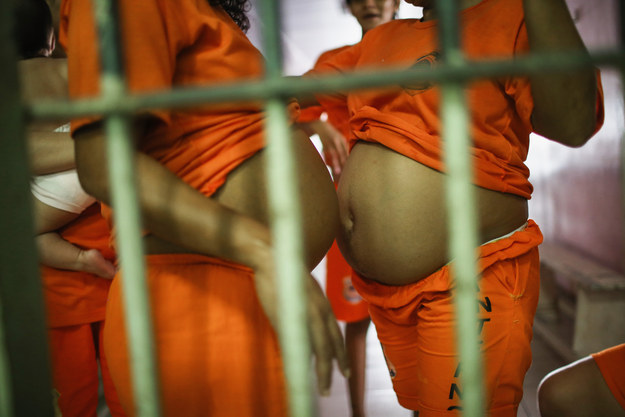
Former inmate, Moipone Nkwana, gave birth to her fifth child
in prison. She was shackled to the bed and experienced first-hand the difficult
conditions of pregnant women and mothers. She served four years for fraud.
According to a report, growing up in a prison can be
traumatic, but it is often seen as the only option. Separation from a parent is
also traumatic, which is why authorities try to make basic provisions.
There is often a lack in provisions for children born in
prison, which puts children’s well-being at risk. Not enough is done to promote
alternatives to custody for mothers with young children, for example: education
and rehabilitation programmes or early conditional release.


