Showing posts with label women in prison. Show all posts

Wednesday, 24 August 2016

The Hard Life of Women in Prison

One of the most vulnerable and over-looked groups of women is female prisoners. Many prisons, such as Sun City in Johannesburg do not even care to provide the specific requirements for the females spending their lives in jail.

In comparison to the overall population of people in South African prisons, the amount of women in jail is very small. 


Even though there are only a small amount of women in prison, they have special needs in the healthcare department, like pregnancy, childcare and child birth. Unfortunately, SA deals with the rights of prisoners as a whole, so there are no rules and regulations made specifically for female inmates.

In 2010, South Africa signed the “UN Rules for the Treatment of Women Prisoners and Non-custodial Measures for Women Offenders (the Bangkok Rules)” which are international guidelines for the treatment of women in prisons. One of the provisions stipulates: “Preventive health-care measures of particular relevance to women, such as Pap smears and screening for breast and gynaecological cancers, will be offered to women prisoners on an equal basis with women of the same age in the community”.

Several women in the Sun City prison in Johannesburg, do not feel like they are getting any benefits from these international guidelines. 

Alice Peterson*, 42, is serving a 12-year sentence for defrauding her former boss out of R1.4 million. Shockingly, she shares one shower and one toilet with the other 38 women who share a cell with her! The worst part is that she is diabetic, but she cannot test her sugar level because she has been told the testing machine at the prison does not work. 

Prisons are designed with only the needs of males in mind, when it comes to females and their needs, they are invisible! 

Often, prisoners will not be allowed to see a doctor unless they are classified as seriously ill. This is how it works in the prison...

- Once a week between 8am and 2pm, a nurse is available (if you're lucky)
- On Mondays prisoners are able to tell her their problems
- She writes down the names, prison number and medical problems in a notebook
- The nurse will then decide on the severity of the sickness
- If the prisoner is not seen as gravely ill, they are given one Panado pill
- If the prisoner really is sick, a doctors appointment is made for Thursday (if they even show up)


“I remember my first month in prison, a lady fell sick and she complained of chest pains, every time she went to see the nurse, she was given a Panado,” says Pearl Mabena*. Pearl, 31, is a former inmate at Sun City, where she spent 6 months awaiting trial before serving two years after a retail card scam went wrong.

“One evening the lady clutched at her chest and she collapsed. We banged on the door, screamed, tried everything and no one came, she fell, still holding her chest and she did not move the whole night, none of us could sleep. When the warders came the following morning to let us out of our cells, they took one look at her and said she was dead. We spent a night with a dead body, she could have been saved.”

Something that is usually kept private by women is menstruation. However, this is a different story for female prisoners who have to look for help from others for basic sanitary items. 

“My family used to visit me regularly, therefore I had enough cosmetics and this gave me the upper hand. Those who had no visits or came from poor families would wash, iron or share their food for a certain period, so they could get the basics,” says Thato Khumalo*, 24. Khumalo served a two-year term for possession of an illegal firearm and ammunition.

Pregnancy and childcare is another issue that is relevant to women. A lot of women were the caregivers of the family before getting sent to jail, some even had small children or were pregnant at the time. Babies up to the age of two years are allowed to stay with their mothers. According to research there are 3 749 women in correctional centres and only 84 of them have babies with them.
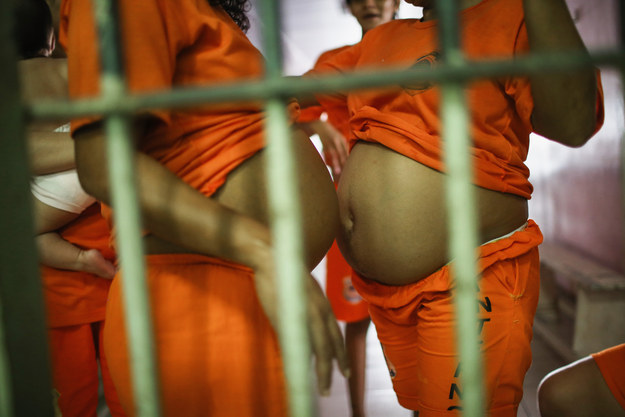

Former inmate, Moipone Nkwana, gave birth to her fifth child in prison. She was shackled to the bed and experienced first-hand the difficult conditions of pregnant women and mothers. She served four years for fraud.

According to a report, growing up in a prison can be traumatic, but it is often seen as the only option. Separation from a parent is also traumatic, which is why authorities try to make basic provisions.

There is often a lack in provisions for children born in prison, which puts children’s well-being at risk. Not enough is done to promote alternatives to custody for mothers with young children, for example: education and rehabilitation programmes or early conditional release.

NICRO is committed to turning lives around - get help for yourself or your loved one by contacting NICRO today!

Wednesday, 10 August 2016

Are women more likely to get away with crime than men?

According to studies, men are more likely to commit a crime than women. However when we look at the sentencing times for men and women, some say that women get off easier with shorter sentences.


There is definitely gender prejudice in sentencing and most people are upset why this. Why do women get special treatment compared to men?

If you look at the issue through statistics, you will see how women are treated favourably, while men aren't given any leniency:

-- 63.3% of men who were sentenced in higher courts received a penalty of imprisonment, compared to just 46.7% of women.

-- Women get an average term of imprisonment of 42.4 months, compared to 60.3 months for men.

-- Male drunk drivers receive fines which are 9.7% higher than those received by women for the same offence.

-- Men are 1.73 times more likely to be sent to prison compared to women.

-- Men's prison sentences are, on average, 1.16 months longer than those received by women.

If we look at some factors that impact someone's prison sentence, such as criminal history, their decision to plead guilty and the charges faced, we also see that again male and females are treated very differently:

A male’s criminal history was given more weight compared to that of females – and generally meant that they received a harsher sentence.

When we look at this information, it leads us to see that it is in fact true that the law does show signs of gender prejudice. 

But what motivates women to commit crimes in the first place? Their reasons are far different to a man's reason for committing a crime. 

For instance, a study  found that women are more likely to be incarcerated for property, fraud and drug-related crimes, while men are more likely to be sent to prison for violent crimes such as assault and murder.

The study also found that women who commit crime are more likely to have experienced drug problems, physical and emotional abuse, and economic hardship when compared to their male counterparts. Researchers also identified five risk factors that increased the likelihood of a woman engaging in criminal activity: parental or familial issues, childhood abuse and neglect, mental illness, a lack of social support and association with other drug users.

In particular, a study found that the severity of a woman’s drug use “is more closely related to their criminality than it is for men, particularly for prostitution and property crime activities.”
Without accounting for these important considerations, it is impossible to accurately compare the treatment of men and women in the judicial system.

As stated, women often experience very different issues to men, and any “decrease” in the sentence may simply reflect these experiences. Indeed, if these matters were taken into account and similar cases were compared against one another, there might be very little difference in sentences.

In a society striving for, and largely achieving, sexual equality, no legitimate distinction can or should be drawn between offenders solely on the basis of gender.

NICRO is committed to turning lives around! Contact NICRO today, either to donate or to get help for yourself or a loved one! 

Monday, 8 August 2016

Crimes Women Are More Likely Than Men To Commit

When it comes to certain crimes, some are more common among women than men.

Women  are more like to go to prison because of fraud or robbery, while men are more likely to have committed violent crimes.


Female vs. Male Prisoners

Inmates by type of offense & gender:

Murder
Women – 12%
Men – 14%
Manslaughter
Women – 2%
Men – 4%
Rape / sexual assault
Women – 2%
Men – 13%
Robbery
Women – 9%
Men – 15%
Aggravated or simple assault
Women – 9%
Men – 11%
Burglary
Women – 8%
Men – 10%
Larceny-theft
Women – 9%
Men – 3%
Motor vehicle theft
Women – 1%
Men – 2%
Fraud
Women – 9%
Men – 2%
Drug possession
Women – 8%
Men – 4%
Other
Women – 1%
Men – 2%


Women Behind Bars

Female prisoners broken down by type of offense:

Murder – 11.1%
Aggravated or simple assault – 8.9%
Robbery – 8.7%
Other violent – 3.7%
Manslaughter – 2.5%
Rape / sexual assault – 2.3%
Larceny-theft – 9.1%
Fraud – 8.4%
Burglary – 6.9%
Other property – 3%
Motor vehicle theft – 0.8%
Other drug – 17.9%
Drug possession – 6.7%
Public order – 8.9%
Other – 1.2%


NICRO is committed to turning lives around and creating a better South Africa - contact NICRO today, or take a look at www.nicro.org.za for a selection of services.

Tuesday, 3 May 2016

CeCe McDonald: Rebuilding her Life after Prison

CeCe McDonald served 19 months in prison and has become the face for victims of anti-transgender discrimination. Why? McDonald braves it all and uses the spotlight to tell her story, the real story...

"I never expected that people would look up to me," she says. "In prison, I got lots of letters of support. It showed that people cared. I never thought that people were actually seeing me as this leader or a role model. It's really amazing that it got to this level, and I'm glad that I have this platform so I can get the word out about the prison-industrial complex, trans women, African-American trans women, people of color."


This is a story of survival, of a woman let down by the exact system that should of been protecting her! The system betrayed her and prosecuted her, when in reality, McDonald and four of her friends were the victims of a brutal verbal and physical assault!

In 2011, the fight escalated when a verbal confrontation turned into a physical one when Molly Flaherty smashed a glass on McDonald's face, slicing her skin and creating a gash that would eventually need to be sewn shut with 11 stitches. Flaherty later pleaded guilty to third-degree assault and was sentenced to 180 days in jail.

Dean Schmitz (Flaherty's ex boyfriend) then pushed McDonald to the ground. As Schmitz approached her with his hands balled into fists, McDonald grabbed a pair of scissors she had been carrying. McDonald stabbed Schmitz with the scissors, inflicting a mortal wound. The 47-year-old Schmitz died at the scene.

McDonald was charged with second-degree murder, though McDonald's lawyer argued that what had transpired was an act of self-defense. With the possibility of a 25-year prison sentence looming, McDonald accepted a deal, pleading guilty to second-degree manslaughter, which resulted in a 41-month sentence. Despite initial hopes that she’d be placed with other women, it was determined that McDonald would serve her time in a men's correctional facility, where she stayed until her release in January.

Finally out, McDonald has spent her time speaking out against the prison-industrial complex. "I felt like they wanted me to hate myself as a trans woman,” she said, adding, "Prisons aren't safe for anyone, and that's the key issue."

Usually transgender women are placed in men's prisons. This is dangerous as they are at a significantly higher risk of getting sexually assaulted or abused compared to their fellow inmates!

Some have argued that trans women should be placed in solitary confinement as a means to reduce their exposure to physical harm, though this has the unwanted effect of inflicting emotional and mental stress on the individual.

"A lot of time people don't know the circumstances that come along with trans women in prison."

McDonald has been working on a documentary titled Free CeCe. It’s her hope that the film will help give a face and a voice to trans inmates, humanizing them: "In the documentary you'll see me as a person, with my family and friends; seeing the personality and the humor, and the life that I have and share with others."

That first qualifier — "person" — speaks to the tragic state of public understanding of trans people. Many trans individuals have frequently said they tend to be teated as a type of aberration or atrocity, as opposed to recognizing their humanity.

The man who attacked McDonald had a symbol of hated, a swastika, tattooed on his chest, also symbolic of what happens when the world fears those who are different. In a fair world— one without institutionalized racism, sexism, and bigotry — maybe he wouldn’t have felt the need to harass a complete stranger, and his friend wouldn’t find it appropriate to physically assault that woman. In a fair world, McDonald wouldn’t have sensed a need to protect herself from imminent harm the way she did.

Sadly, this isn't a fair world. McDonald went to prison and Schmitz died. But McDonald hopes her story and others can help change that.

"I feel like, at first, I wasn't ready for this type of leadership, this type of position," McDonald says of her status as a role model. "But there's no one out there who's really saying it."

McDonald says it's most important to forge unity between all people to come together in an effort to fight deeply ingrained negative societal assumptions.

"If I need to take this position, to use this platform to get this word out, then I will," she says. "I want to see some type of change. We need to be more collective, have an initiative to change the hate, discrimination, and injustices for the LGBTQI community."

What the world does have, however, is hope. Because McDonald had to endure this event and because she had to experience firsthand how society’s biases can be used against her, she has become uniquely qualified to lead a conversation moving forward, taking on the considerable task of chipping away at the world’s evils.

NICRO is committed to turning lives around - We encourage all South Africans not to stand back, but become involved either by donating a monthly amount, a once-off donation or look at the NICRO wish list for support in kind for around the country and see how you can assist.

Tuesday, 12 April 2016

What A Day In The Life Of A Woman In Prison looks like

Despite what you may see on the TV (Orange is the New Black), life as a woman in prison isn't exactly what you believe it to be.

It is boring, and that is the best-case scenario! When we look at the worst case, a female in prison can be the victim of abuse, sexual harassment and high levels of neglect. The truth is, being a woman in prison is far from ideal!

In the world right now, there are millions and millions of women serving criminal sentences, most of which are for non-violence crimes. Even though women are seen as low-risk prisoners, the way that female and male inmates are treated are very much the same. (This even effects their prenatal care and feminine hygiene product allowances).

Female prisoners follow similar daily routines as male inmates. Here is the daily schedule of a prison, filled in with details from former female inmates' accounts...

6 A.M.: Hello World

Prisoners typically wake up between 5 and 6 a.m. in the morning to be counted and checked by guards. Almost all prisons have inmates share cells. Sometimes women will share with one or three other women, but some prisons have up to 20 women sharing one large room. If the inmate has a job in the prison's kitchens, the day can start as early as 3:30 or 4 a.m.

Right after waking up, inmates will go to breakfast, where they typically receive about 30 minutes to eat. Then they go to their various jobs. Every prisoner is expected to have a job, ranging from working in the kitchen to taking out trash. Prisoners fulfill janitorial roles, serve food, work on construction crews, do laundry, and other miscellaneous tasks. Depending on how time-consuming the job is, prisoners are expected to work until lunch time.

12 P.M.: Lunch is Here

Like breakfast, inmates receive 30 minutes to an hour to eat lunch before returning to their jobs or enjoying their free time. Depending on the facility and the nature of their crime, female prisoners can receive more freedom than their male counterparts, and during the day, they often have access to the gyms, bathroom facilities, library, and other recreational areas. Or they can visit the prison commissary.

All of the wages that prisoners make during their incarceration are handled electronically and can be spent in an in-prison store. Family and friends of the women can deposit money into their account each month, which can be used to purchase toothpaste, deodorant, soap, snacks, and other food. But commissary prices are expensive, and if women do not receive outside support, they are often unable to buy anything but absolute necessities. And, given their low pay, they often cannot afford even that much.

3 P.M.: End of the Work Day

At the end of the work day, inmates can go to the prison yard for an hour or return to their cells, depending on how much freedom the facility gives them. At 5 p.m., they have dinner. Depending on the facility, some inmates can make their own food. Commissaries sell various types of groceries, and some prisoners find creative ways to make meals or desserts.

After dinner, their schedules are flexible. Some facilities offer religious services in the evening, and some provide counseling or rehabilitation courses. However, due to low budgets, many women's prisons do not offer these types of resources for their inmates.

8 P.M.: Goodnight World

In the evening, prisoners can go to sleep anywhere from 8 p.m. to midnight. Many facilities typically turn out lights around 11 p.m., but during the time when prisoners return to their cells, they have relative freedom to choose their activities. Because prisoners who don't have heavy work schedules can have downtime during the day, women tend to bond closely with the other prisoners, creating prison "families" for support and companionship. At night the inmates are counted again — they're counted several times during the day — and they go to sleep. The next morning, the entire cycle repeats.

While the daily routine can be monotonous, weekends can be a reprieve to some women. Most facilities have visiting hours on weekends, although women's prisons don't tend to get as many visitors as male inmates.

The life of a female in prison can be lonely, with few opportunities for rehabilitation. Prisons are overcrowded, and physical health can often be ignored or endangered. As laid-back as it may seem sometimes, you wont want to sign up to join the fun.

We have a wide variety of services here at NICRO, including individual counselling, anger management programmes, adult life skills and even a positive parenting programme. We focus on providing services to the community in general – take a look at what services we have on offer.