Showing posts with label NICRO prison programmes. Show all posts

Wednesday, 24 August 2016

The Hard Life of Women in Prison

One of the most vulnerable and over-looked groups of women is female prisoners. Many prisons, such as Sun City in Johannesburg do not even care to provide the specific requirements for the females spending their lives in jail.

In comparison to the overall population of people in South African prisons, the amount of women in jail is very small. 


Even though there are only a small amount of women in prison, they have special needs in the healthcare department, like pregnancy, childcare and child birth. Unfortunately, SA deals with the rights of prisoners as a whole, so there are no rules and regulations made specifically for female inmates.

In 2010, South Africa signed the “UN Rules for the Treatment of Women Prisoners and Non-custodial Measures for Women Offenders (the Bangkok Rules)” which are international guidelines for the treatment of women in prisons. One of the provisions stipulates: “Preventive health-care measures of particular relevance to women, such as Pap smears and screening for breast and gynaecological cancers, will be offered to women prisoners on an equal basis with women of the same age in the community”.

Several women in the Sun City prison in Johannesburg, do not feel like they are getting any benefits from these international guidelines. 

Alice Peterson*, 42, is serving a 12-year sentence for defrauding her former boss out of R1.4 million. Shockingly, she shares one shower and one toilet with the other 38 women who share a cell with her! The worst part is that she is diabetic, but she cannot test her sugar level because she has been told the testing machine at the prison does not work. 

Prisons are designed with only the needs of males in mind, when it comes to females and their needs, they are invisible! 

Often, prisoners will not be allowed to see a doctor unless they are classified as seriously ill. This is how it works in the prison...

- Once a week between 8am and 2pm, a nurse is available (if you're lucky)
- On Mondays prisoners are able to tell her their problems
- She writes down the names, prison number and medical problems in a notebook
- The nurse will then decide on the severity of the sickness
- If the prisoner is not seen as gravely ill, they are given one Panado pill
- If the prisoner really is sick, a doctors appointment is made for Thursday (if they even show up)


“I remember my first month in prison, a lady fell sick and she complained of chest pains, every time she went to see the nurse, she was given a Panado,” says Pearl Mabena*. Pearl, 31, is a former inmate at Sun City, where she spent 6 months awaiting trial before serving two years after a retail card scam went wrong.

“One evening the lady clutched at her chest and she collapsed. We banged on the door, screamed, tried everything and no one came, she fell, still holding her chest and she did not move the whole night, none of us could sleep. When the warders came the following morning to let us out of our cells, they took one look at her and said she was dead. We spent a night with a dead body, she could have been saved.”

Something that is usually kept private by women is menstruation. However, this is a different story for female prisoners who have to look for help from others for basic sanitary items. 

“My family used to visit me regularly, therefore I had enough cosmetics and this gave me the upper hand. Those who had no visits or came from poor families would wash, iron or share their food for a certain period, so they could get the basics,” says Thato Khumalo*, 24. Khumalo served a two-year term for possession of an illegal firearm and ammunition.

Pregnancy and childcare is another issue that is relevant to women. A lot of women were the caregivers of the family before getting sent to jail, some even had small children or were pregnant at the time. Babies up to the age of two years are allowed to stay with their mothers. According to research there are 3 749 women in correctional centres and only 84 of them have babies with them.
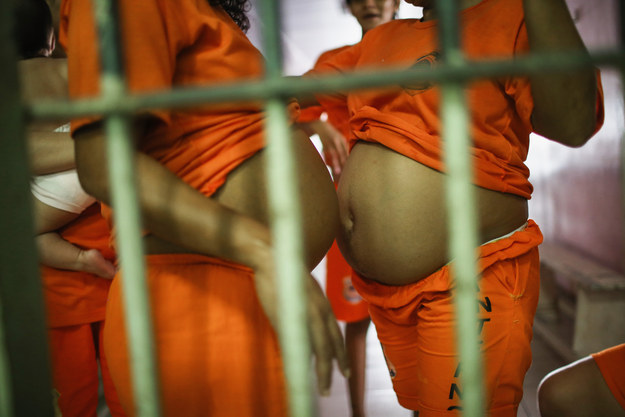

Former inmate, Moipone Nkwana, gave birth to her fifth child in prison. She was shackled to the bed and experienced first-hand the difficult conditions of pregnant women and mothers. She served four years for fraud.

According to a report, growing up in a prison can be traumatic, but it is often seen as the only option. Separation from a parent is also traumatic, which is why authorities try to make basic provisions.

There is often a lack in provisions for children born in prison, which puts children’s well-being at risk. Not enough is done to promote alternatives to custody for mothers with young children, for example: education and rehabilitation programmes or early conditional release.

NICRO is committed to turning lives around - get help for yourself or your loved one by contacting NICRO today!

Friday, 19 August 2016

I’m Raising my Baby in Prison

New mother Keisha is a natural as she attends to her baby son Jack. The mother-son bond is clearly secure and loving.

On the surface of it, little Jack’s surroundings are pretty idyllic. He has a comfortable cot, stimulating toys and a pram for walks.


Outside is a well-kept green lawn with colourful playground equipment. There are other mothers and babies nearby, an indoor play area and he undergoes his regular infant checks by health workers. To Jack, the world looks pretty good. And yet in truth his environment is anything but typical. For Keisha, 22, and Jack are living within the secure confines of Jacaranda Cottages mothers and babies unit at Emu Plains Correctional Centre in Sydney’s west.

While some may flinch at the idea of a baby living in prison, the alternative – a newborn being separated from their mother, even if circumstances are safe for them to be together – is arguably worse.

Being imprisoned as a new mother still has its challenges, such as having no freedom or autonomy and being constantly monitored by government departments, but it’s also an opportunity for inmates to take part in parenting programs and build an important bond with their baby.

At Jacaranda Cottages, babies and young children up to school age can live with their mum while she serves her sentence.

Here Keisha, who began taking drugs after falling in with the wrong crowd as a teenager, tells  what her life is like in jail and how the experience is shaping her future.

“My life is good at Jacaranda Cottages because I have been able to bond with my newborn son,” she says. “I was lucky to get onto the program as obviously there are some inmates who don’t meet the criteria. My daily routine is just like any other mother apart from having a head check (a headcount to ensure all inmates are present) at 6.30am. I then prepare my son’s day and the Mothers and Children’s program runs groups that we must attend, including parenting courses, art therapy and playgroup," she says.

“I get constant support from staff and other inmates too. When I was pregnant I had pre-natal checks and after Jack was born at the local public hospital under the guard of a prison officer, my family came down and stayed in a hotel in the area. This enabled them to meet my child and also gave me comfort of having them around at this special time.

If I hadn’t been able to keep Jack with me the alternative would have been for my baby to be cared for by my sister who is completing a nursing degree. She would have had to put her studies on hold until I was released.

I’ve been able to address my drug abuse issues while I serve my sentence and I feel confident when I am released that I will be a good mother and citizen.


Now I’m looking forward to getting back into the community. I’m going to create a positive future for myself and my son. I’m planning to do a TAFE course in business and I hope to bring my child up to be a fine young man.”

It wasn't until after Keisha was convicted of drug charges she learned she was pregnant. Inside Australian prisons life isn’t so bad for mother and child, but this isn’t always the case in different countries.


If you or a loved one is pregnant and has been charged with a criminal offense, arrested, etc. Contact NICRO right away to get help!

Thursday, 16 June 2016

From Taking a Life to Saving Lives


Xavier McElrath-Bey grew up surrounded by gangs. Even though he was still a young elementary school child he knew what places and streets to avoid and he knew to stay away from gang territory. 

His family life was tough. He and his siblings often went hungry and they were placed in foster care at 6 years old. His foster care life wasn't any better than his original family, as he was beaten and abused. 

After a few years they returned to their mother, unfortunately her boyfriend would beat her and the children. This was when Xavier joined his surrogate family, his gang, the Latin Kings.

“It’s not like you wake up and say, ‘I want to become a gang member because my mom or my dad is abusing me. There is a certain level of insecurity and feeling unsafe. You want to connect with a group.”

“You want to empower yourself, not to mention you want to have someone that you feel connected with when you come from a home environment where there’s a lot of neglect and abuse.”

Xavier began becoming involved in crimes - armed robberies, weapons violations, aggravated batteries and assaults. By the time he was only 13 years of age, he had been arrested a shocking 19 times and gone to juvenile facilities seven times!

The incident happened in October 1989 when Xavier was just 13 years old. He and the Latin Kings lured a rival gang member into a vacant building and fatally beat and stabbed him. The victim was only 14 years old.

Xavier was arrested two weeks later and received a sentence of 25 years.

“When you’re a kid, you really just live for the moment; you know you’re caught up in a daily struggle for survival in that prison system: What’s going to happen in the yard? Is there going to be a riot?” McElrath-Bey said.

After being moved to a maximum-security prison for adults at only 17, Xavier began to change his thinking for the better. 

He often watched TV shows liked "Saved By the Bell" and wondered what his life would be like if he never made the mistakes he had made. 

From there, his life changed. He decided to get enrolled in school and be as he would have been in free society had he never been arrested. 

Xavier thought about simple freedoms like being able to walk to your own refrigerator or stepping outside to smell the grass. “That becomes like a fantasy world because in prison your concept of a free society is like that of heaven,” he said.

He worked toward his goals while still in prison, earning a bachelor’s degree in social science (with a 4.0 GPA) in 1999 at a prison in Galesburg, Ill., where the Chicago-based Roosevelt University offered courses.

In his mind’s eye, the former gang member said, he continually returned to that October night in 1989 — and has often thought about the victim and the dead boy’s mother.

“I think about the fact that he was no different from me. He was a kid who grew up with a troubled life in a poor family,” McElrath-Bey said. “That could have very well easily been me. That could have been my mother mourning, so I just think about his loss and what that really meant and how tragic it really was because it was based upon this false illusion of us and them.”

For McElrath-Bey, freedom came at last in 2002 after he served 13 years in prison.

He wasted no time making up for the lost years of his youth.

As a newly released 26-year-old, he took a job at Starbucks and soon enrolled part-time at Roosevelt, where he earned a Master of Arts degree in human services in 2006.

McElrath-Bey stayed close to the justice system in a decade-long series of jobs — but on the right side of the law this time.

He served from 2003 to 2006 as a “ceasefire outreach worker” for the Chicago-based Alliance of Local Service Organizations, helping at-risk youth through case management, home visits and referrals; providing crisis intervention and assistance to gunshot victims at a hospital; and helping organize annual peace walks.

McElrath-Bey went on to work for Catholic Charities of the Chicago Archdiocese, specializing in gang intervention and providing services to at-risk youth and families living in bad neighbourhoods, like where he grew up.

He then worked for the Chicago-based non-profit Alternatives Inc. with youths referred by the juvenile justice system.

At the Northwestern Juvenile Project, part of Northwestern University’s Feinberg School of Medicine, where he spent more than five years, McElrath-Bey conducted interviews with more than 800 participants in a longitudinal study of the mental health needs of formerly incarcerated youth.

This month, McElrath-Bey, 38, began working in his new role as a youth justice advocate at the Campaign for the Fair Sentencing of Youth.

In the Chicago-based job, he will advocate for reforming the juvenile justice system, particularly by eliminating extreme sentencing of youngsters, and try to dispel stereotypes.

“What I intend to do,” McElrath-Bey said, “is share about my life and change the face of formerly incarcerated youth — have people understand that these are not a bunch of monsters.


“They’re not a bunch of incorrigible super-predators but in fact these kids have great potential for positive change, and not only am I an example of that, but I know so many other individuals who have made such tremendous change and are great models to look at and say, ‘You know what, there is hope.’ So much is giving them an opportunity and chance. There truly is hope for these guys to reform their lives.”

Do your part in making a change, contact NICRO today or browse through to website to view the wide range of different services and programmes!

Thursday, 2 June 2016

Innocent man in prison was treated like the scum of the earth


A 22 year old steel worker who was falsely accused of rape, decided it was better for his safety if he fabricated a story and told other inmates that he was in prison for a shooting. But, one day, his name and charge details were revealed.

"In prison, if you are in for anything relating to a sex offence you are the lowest of the low," he explained. "My lawyers and even the prison staff told me that I would be in serious danger if other prisoners found out what I was charged with. So I concocted this story about being a career criminal who was in over a shooting. People seemed to believe it, but when my name was in the paper they realised why I was really there. I didn't leave my cell again."

In March 2009, James and a friend were accused of rape. Apparently they had burst into her home, threatened her with a knife and then raped her. The truth was, James knew the woman beforehand and she has invited them over after a night out.

James and his friend had never spent any time in jail. Luckily for his friend, he got bail and could leave after 10 days, but James was on remand for a full year. He had to spend most of the time in one of Britain's toughest prisons.

After a long hard battle, they were both acquitted in March this year. But even though he was cleared, James still says the feeling of being accused of rape still haunts him. He has not only lost a year of this life for something he did not do, but he is also not sure if he still has a job.

"Being accused of something I did not do was a nightmare," he said. "But when people in prison found out what the allegation was my life became unbearable. They would put razor blades under the door and urinate into my cell. They threatened me and my family.

"I was in a cell for 23 hours and 45 minutes a day for my own safety. The only time I was allowed out was for 15 minutes at night time when all of the other prisoners were asleep.

"Eventually I had to be transferred to Barlinnie for my own safety. I told the other prisoners the shooting story, which worked for a while, but then one of the guys from Addiewell was transferred too and it started again. I was put on suicide watch and I refused to eat. When I went out on the wing, people would point and say, 'there's the monster'.

"Next they moved me to the sex offenders' wing. I was the only remand prisoner there, and it was hell. There were rapists and pedophiles and I did not want to associate with these guys but I was being treated like one of them."

Even after his horrible experience, James has decided to support the suggestion that rape suspects should be given the same anonymity as victims. The proposal has been opposed by women's rights groups, who say that such a move would prevent genuine rape victims coming forward.

James said: "I understand that rape victims should have anonymity, but I do not see any reason why suspects should have their names in the public domain if they have not been found guilty of a crime.

"I fully agree that rapists should be named and shamed. They are the scum of the earth and their names and photographs should be in every newspaper. But in my opinion that should only happen when they are convicted.

"I had my name dragged through the dirt because of a false allegation. I was labelled a rape suspect and it nearly ruined my life.

"My name was cleared in a court of law but even now I hear the phrase 'no smoke without fire' and I feel that some people still look at me and say things behind my back.
 
"I agree with what women's groups say 99.9 per cent of the time. I think what they do for victims of rape is great because it is a terrible crime, but on the point of anonymity I have to disagree.

"When I was in Barlinnie I met three people who were on remand for rape: two were acquitted and the other had his conviction overturned on appeal. So false allegations do happen.

"People have to realise that cases like mine do occur. But because I was not entitled to anonymity my name was plastered across the newspapers with the word rape next to it. I will forever be linked with a rape accusation, even though I have been acquitted."

Have you been charged with a criminal offence? Let NICRO help you out during this tough time, we can offer a wide range of services to you. All you have to do is contact NICRO today!

Friday, 27 May 2016

Are you willing to report a family member?


It takes a lot of guts and pure bravery to report someone abusive to the police, but it takes even more to report an abusive family member! We know for a fact that most of the abusers are members of the family, and studies show that barely any instances are reported to the police. So, why aren't more people coming forward and reporting abuse?

It could be that people don't want to "tell on", "rat out" or get their family members into trouble, even though abuse is taking place. There is a lot of shame in a member of your family abusing you, there is also a lot of fear of what they will do.

Most people would rather keep quite and suffer in silence than report abuse to the law. Even if a family member is reported, later on in the situation the victims may even refuse to speak up or testify against them. This means that charges may not stick, the abuser will probably be released and begin abusing the victim again.

It is as much a problem of our emotions and fears as it is of the wrongdoing itself. We somehow justify the actions, we look the other way or we fear what the justice system will do to our abusive relative.  We must stop giving thieves a pass.

Why are we remaining silent so often?

Whether or not the criminal justice system can prove the crime is not your problem.  It is your problem to know about the abuse and to do nothing.  One day it could be you who is victimized.

At NICRO we urge you to do your part to report abuse and to do something about it! If you or a loved one is ever in need, do not hesitate to contact NICRO right away!

Friday, 20 May 2016

Life After 44 Years in Prison

After being in prison for 44 years, the world can be an overwhelming place. To Otis Johnson, there was a vast amount of people walking fast, staring at their mobile devices and not paying attention to the world around them.

This can be a confusing time for someone who has been in prison since 1975. Johnson feels that he has entered a frightening society where everyone is a secret agent, watching people and wearing wires. We don't blame him, the tech era completely passed him by when he has in prison.


The 44 year sentence began when Johnson was arrested for the attempted murder of a police man. He entered jail when he was just 25 years old and by the time he came out in August 2014 he was 69.

Johnson was meant to be released earlier, but he ended up serving an extra eight months at the age of 69 for a juvenile shoplifting charge he received when he was 17!

The initiatives to reduce the sentences for drug offenders and nonviolent crimes are under way, but it seems like the old people in prison also need a legislation reform.

From 1999 to 2014, the amount of prisoners aged from 55 and older went up by 250%, while those younger than 55 grew by only 8%. It seems that the number of elderly prisoners is growing over the years.

After drug offenders are qualified for early release, elderly prisoners could be next to be reintroduced into the world.

But, just think about the problems and obstacles that former inmates will face after spending most of their lives locked up. They will face things such as mental health issues and side effects.

“Prison decides when lights go on and when they go off,” Marieke Liem, a researcher at Harvard Kennedy School, said “Every moment of the day is scheduled. When you have been in the prison system the majority of your life, how can you be expected to function as a member of society? And make a plan?”

Upon release from prison, Johnson was handed an ID, documents outlining his criminal case history, $40 and two bus tickets. Having lost all family connections while serving his sentence, Johnson now relies on a nonprofit that provides housing and services to ex-prisoners in Harlem. NICRO is a nonprofit organisation in South Africa that provides a number of rehabilitation services, prison programmes and so much more. Do your part and contact NICRO to get help, or make a donation today!

Each day, he navigates the world as best as he can. He involves himself with a local mosque. He practices tai chi and meditates. He attempts to pursue his dream of opening up a shelter for women, though with his lack of credit history securing the funds for such a project has proven close to impossible. He walks the streets of New York, observing people around him. He returns to his nonprofit housing at 9pm each night, heeding his curfew.

With the current focus on reform, Johnson hopes that re-entry for ex-prisoners, including those having served for decades, will be streamlined to effectively address their needs. Whether freedom can prove liberating, rather than overwhelming, for those convicts who have grayed behind bars, remains to be seen.

Wednesday, 18 May 2016

What Happens when a Baby is Born in Jail?


Even though a large section of women in US prisons are mothers, we still do not have a policy to say what should happen to their babies born behind bars!

Where are these babies going? Yes, in the 1950s nurseries in prison where an everyday thing, but what happened after the prison population sky-rocketed? Studies show that the number of women in prison quadrupled, which means that prisons could no longer afford to accommodate raising a baby in jail.

It is no surprise that most mothers in prison had to give up their baby or place the kids with relatives.

Recent studies show that in order to create a mother-baby bond, the first two years of the child's life are extremely important. Children that do not experience this are more likely to act up and show bad behaviour later on in life. Another factor is that women who are allowed to raise their children are less likely to return to a life of crime.

NICRO is a non-profit organisation which offers a range of different servicescrime prevention, diversion, non-custodial sentencing, offender reintegration. If you or a loved one is ever in need, do not hesitate to contact NICRO right away!

All across the world, it is agreed that a baby's place is at their mother's side. In Sweden, babies can be accommodated for up to a year (the average stay is three months). In most European countries, mothers are allowed to keep their infants through weaning. Prisons in India are required to offer nurseries and day care for mothers and their children. In Chile, jail-born children begin taking state-run educational programs at six months of age. In Mexico, children are required to stay with their mothers until they’re 6 years old, and have the freedom to leave on weekends and holidays.

For those who are angered by just thinking about babies being raised in prison, Germany represents a common sense compromise. There, qualified mothers are allowed to leave prison every morning to see their children off to school, spending the day doing housework and preparing meals for their children. At the end of the day, the women return to the jail to sleep. Their waking hours are spent fostering a stable, nurturing environment for the next generation, one that won’t have to remember a childhood spent behind bars.

Obviously, jail is not the perfect place to raise a child. However if you separate a mother from their child, this can be cruel and damaging to both mother and child.

Thursday, 12 May 2016

Darius Clark Monroe Revisits his Past

In 1997, a young Darius Clark Monroe robbed a bank in Stafford, Texas with two friends when he was only 16 years of age. This parents were struggling with money, so Monroe, being young and stupid, thought taking a gun to a bank and stealing would be the right thing to do. Unfortunately, he was tried as an adult and served a long three years in a prison cell for the crime.

After this horrible event, you would think that Monroe would want to forget his crimes and never look back. But when he was a student at  NYU film school, Monroe decided in order to gain closure, he would need to go back to the past.

He decided to shoot a documentary "Evolution of a Criminal" with one of his NYU professors.

The documentary is made up of interviews with Monroe's family, his teachers and law enforcement officials. He also decided to create a reenactment of the crime to show how the crime happened.

However, the most intense moments in the documentary happen when Monroe visits the homes of the people who were in the bank that day and apologizes to them for what he put them through.

Here are a few questions Monroe was asked about his documentary...
  • How did it come to be that you decided to turn the camera on yourself and tell this story?

It started because of a weird situation that happened in New York many years after the robbery. I had a really, really bad panic attack standing inside of a bank. I thought someone who was pacing back and forth outside the window was going to come in and rob it. I just created this whole incident in my head.

I knew that the panic attack was due to the fact that I had been involved in a robbery as an offender, but I always believed that I would be a victim one day. And so that's sort of what got my mind to think about the customers inside the bank [I robbed] and the fact that I had never really just gone down to apologize, to seek these individuals out and to ask for forgiveness. I felt the need to have a conversation. I just felt like so much time had gone by, and I was ashamed that I had not really considered the fact that these people deserved a proper apology.

  • So was that when you knew you wanted to make a film?

No. Actually, it just turned into me wanting to go there and find the people. My best friend, Daniel Patterson, who is also the DP of the film, was like, "Take cameras with you. Who knows what may happen? You should film this journey."

We thought the film would be more about me making the film about trying to track down these people inside the bank, and it changed completely after talking with my mother because I realized that there was just so much about the robbery and my incarceration that we never spoke about, and I became fascinated with what influenced me to make this choice in the first place.

And I knew that I was going to have to be in there because there was just no way I could ask my family to essentially rip their hearts out again and go down this road if I wasn't willing to do it myself.

  • Was your family open to reliving all of this again on camera, or did it take some convincing to get them to agree to be interviewed?

They were pretty much open to it when I mentioned it to them, but the thing, I think, that was surprising for a lot of us, was that we felt there was some sense of distance from the topic and closure, but we were all fooling ourselves. I knew that for a fact because the moment we started the interviews and got to the topic of the robbery and all the circumstances around it emotions were super high. None of us had really worked through any it. I think everybody was sort of surprised by how emotional and how raw they were years later.

  • You also apologize to some of the people who were in the bank at the time you rob it, showing up at their homes and knocking on their doors. What was that like?

It was terrifying. I was terrified because I didn't know what type of response I would get or who was going to show up at the door. I also didn't know if they were going to show up at the door with a shotgun once they found out who I was.

  • Your mom must be so proud of you.

It's funny. She's been smiling so much this whole year, and I know she's proud. It was a tough situation when she found out about the robbery and me going to prison. So to go from such a really dark and down place to having a film out that’s being shown at festivals and being able to talk about what happened and not feel ashamed . . . This was an experience that no one could ever imagine would happen. It’s been quite surreal, and it's been extremely humbling, and it just shows the power of resilience and faith and hope and possibility that’s within us human beings. It's a beautiful thing.

NICRO is committed to turning lives around. Do you, or a loved one need help? We have a variety of different rehabilitation programmes and services. Or do your part to help others and donate today!

Tuesday, 10 May 2016

Children Pay the Price when Parents go to Jail

A parent may be going to jail, but the child will pay the ultimate price! We take a look at how prison can affect a child's life...

When she was a child, 22-year-old Ifetayo Harvey's father was sentenced to prison for cocaine trafficking.


"My dad went to prison when I was 4 years old, and he was released when I was 12," Harvey says.

Harvey is one of millions of young people who grew up with a parent in prison. A recent study found that prison can have an extremely negative effect on children and ultimately the whole family when a parent ends up in jail.

Like many children with incarcerated parents, Harvey has suffered for her father's crime.

But at first, she didn't even know her dad had gone to prison.

"I noticed that my dad was gone for a while, but because my parents weren't married and they didn't live together, I assumed that he would be back," Harvey says.

She started receiving letters from her father, and was confused by the long strings of letters and codes. She says it was in sometime in first or second grade that her mother told her that her father was in prison.

"I was really sad about it," she says.

In his letters, he told her how much he loved and cared about her, but Harvey says it felt like a contradiction with him not being there while she was dealing with a lot of depression and shame. "It was just a really confusing time," she says.

Even though the rate of incarceration has basically quadrupled over the past four decades, no one has really studied its effects on the family - especially the kids!

This is an important social question which is not getting enough attention from the research community — not because there is not enough interest, but because we've not been willing to pay for it.

The number of kids with an incarcerated parent is "staggering."

There are higher rates of homelessness among families when the father is in prison, poor developmental outcomes for the children in those families, and that there's greater family instability in those families.

The children in those families often end up in foster care and have difficulties in school forming attachments with their peers. All of those difficulties, present challenges for the communities, social workers, educators and family members who want to support that child through such a difficult time.

The first step, he says, is that we should have fewer people in prison, but it is more complicated than that.

We will always have people in prison however, we should pay attention to the collateral consequences of incarcerating parents.

Ifetayo Harvey is one of the lucky ones, in a way. She had the help and support of a larger extended family, and says she had positive role models in her family. This was in sharp contrast to the example her father set.

"Maybe even my dad being incarcerated motivated me to do the best that I could in school, so something like that wouldn't happen to me or anyone that I knew," she says.

But in many other ways, Harvey suffered from the problems laid out in the study. She never visited her father, who was in a prison out of state. She never had any phone calls. The absence of her father was a big burden on her mom.

"My mom is a single parent of seven kids, and once my dad went away, this put a really big financial strain on my family," she says.

Harvey says she often made something up when asked what her dad did for a living, to avoid having to explain he was in prison.

"It's hard to explain that to people because there's such a heavy stigma against people who are incarcerated or formerly incarcerated," she says.

Harvey says that lately she's been focused on the positive aspects of growing up with a parent in prison. She says it taught her to empathize and understand people from a different angle.

Harvey's dad was deported back to Jamaica after he was released. She saved up enough money to make a trip there to visit when she was 16 years old. Before that trip, it has been 12 years since she's last seen him. She says it was a good experience, though a little awkward at times.

"But I was willing to rebuild our relationship, and I think it's good," she says. "It's good for what it is; my dad calls me once or twice a week."

Harvey just graduated from Smith College and now wants to pursue a master's degree in social work. Her dad's experience gave her a passion for social justice, and she's no longer ashamed to talk about this part of her life.

"I get power from speaking the truth of my story to others," she says. "I think that once you realize that you're not alone in your struggle, it's easier to heal."

We encourage all South Africans not to stand back, but become involved either by donating a monthly amount, a once-off donation or look at the NICRO wish list for around the country and see how you can assist.

Tuesday, 3 May 2016

CeCe McDonald: Rebuilding her Life after Prison

CeCe McDonald served 19 months in prison and has become the face for victims of anti-transgender discrimination. Why? McDonald braves it all and uses the spotlight to tell her story, the real story...

"I never expected that people would look up to me," she says. "In prison, I got lots of letters of support. It showed that people cared. I never thought that people were actually seeing me as this leader or a role model. It's really amazing that it got to this level, and I'm glad that I have this platform so I can get the word out about the prison-industrial complex, trans women, African-American trans women, people of color."


This is a story of survival, of a woman let down by the exact system that should of been protecting her! The system betrayed her and prosecuted her, when in reality, McDonald and four of her friends were the victims of a brutal verbal and physical assault!

In 2011, the fight escalated when a verbal confrontation turned into a physical one when Molly Flaherty smashed a glass on McDonald's face, slicing her skin and creating a gash that would eventually need to be sewn shut with 11 stitches. Flaherty later pleaded guilty to third-degree assault and was sentenced to 180 days in jail.

Dean Schmitz (Flaherty's ex boyfriend) then pushed McDonald to the ground. As Schmitz approached her with his hands balled into fists, McDonald grabbed a pair of scissors she had been carrying. McDonald stabbed Schmitz with the scissors, inflicting a mortal wound. The 47-year-old Schmitz died at the scene.

McDonald was charged with second-degree murder, though McDonald's lawyer argued that what had transpired was an act of self-defense. With the possibility of a 25-year prison sentence looming, McDonald accepted a deal, pleading guilty to second-degree manslaughter, which resulted in a 41-month sentence. Despite initial hopes that she’d be placed with other women, it was determined that McDonald would serve her time in a men's correctional facility, where she stayed until her release in January.

Finally out, McDonald has spent her time speaking out against the prison-industrial complex. "I felt like they wanted me to hate myself as a trans woman,” she said, adding, "Prisons aren't safe for anyone, and that's the key issue."

Usually transgender women are placed in men's prisons. This is dangerous as they are at a significantly higher risk of getting sexually assaulted or abused compared to their fellow inmates!

Some have argued that trans women should be placed in solitary confinement as a means to reduce their exposure to physical harm, though this has the unwanted effect of inflicting emotional and mental stress on the individual.

"A lot of time people don't know the circumstances that come along with trans women in prison."

McDonald has been working on a documentary titled Free CeCe. It’s her hope that the film will help give a face and a voice to trans inmates, humanizing them: "In the documentary you'll see me as a person, with my family and friends; seeing the personality and the humor, and the life that I have and share with others."

That first qualifier — "person" — speaks to the tragic state of public understanding of trans people. Many trans individuals have frequently said they tend to be teated as a type of aberration or atrocity, as opposed to recognizing their humanity.

The man who attacked McDonald had a symbol of hated, a swastika, tattooed on his chest, also symbolic of what happens when the world fears those who are different. In a fair world— one without institutionalized racism, sexism, and bigotry — maybe he wouldn’t have felt the need to harass a complete stranger, and his friend wouldn’t find it appropriate to physically assault that woman. In a fair world, McDonald wouldn’t have sensed a need to protect herself from imminent harm the way she did.

Sadly, this isn't a fair world. McDonald went to prison and Schmitz died. But McDonald hopes her story and others can help change that.

"I feel like, at first, I wasn't ready for this type of leadership, this type of position," McDonald says of her status as a role model. "But there's no one out there who's really saying it."

McDonald says it's most important to forge unity between all people to come together in an effort to fight deeply ingrained negative societal assumptions.

"If I need to take this position, to use this platform to get this word out, then I will," she says. "I want to see some type of change. We need to be more collective, have an initiative to change the hate, discrimination, and injustices for the LGBTQI community."

What the world does have, however, is hope. Because McDonald had to endure this event and because she had to experience firsthand how society’s biases can be used against her, she has become uniquely qualified to lead a conversation moving forward, taking on the considerable task of chipping away at the world’s evils.

NICRO is committed to turning lives around - We encourage all South Africans not to stand back, but become involved either by donating a monthly amount, a once-off donation or look at the NICRO wish list for support in kind for around the country and see how you can assist.

Friday, 29 April 2016

Do Prisons Really Make Offenders Worse?

A lot of people think that prison is a place where crimes sits and breeds, the idea is that if you put people in prison they will get worse. Is it really unavoidable? Will offenders really turn into even more of a corrupt and violent person when they leave prison?

The main conversation topics among prisoners is generally crime, drugs and gossip about who did what and to who. They often brag about what they have done and even team up with other criminals in jail and hatch new plans and schemes. Some carefully engineer crimes that are committed by other people outside prison. These inmates are often gang leaders who can influence people outside the prison walls.

A number of offenders were recently interviewed in numerous institutions about whether or not jail really makes someone worse than they were before.

Their answers may be surprising! Inmates emphasize that choices are continually made about how time is served. Some aspire to be prison kingpins.

Confinement is just one more arena in which to conduct criminal operations. Others, however, have an entirely different view and make choices in an entirely different decision. They adhere to the prison rules and policies while remaining out of the "action." Fed up with how they have lived, they desire to change or, at the very least, not risk incurring new charges which will extend their time in prison. They participate in programs and try to get along with other inmates and with institutional staff.

Inmates who abstain from criminal activities in prison remain cordial, to other inmates. Not wanting to be tagged as "snitches" or informants, they participate in a variety of activities that do not violate the rules. And they have no interest in committing new crimes. Some develop disgust (that they do not express publicly) with their fellow inmates who are perpetually devising new schemes, con games, and manipulative maneuvers. They report that others leave them alone and do not try to pressure them into involvement in more violations and crimes. They have found that, usually, the other inmates respect them.

In short, just as he did in the free world, an inmate chooses the people with whom he develops close associations. He makes decisions about the type of person he wants to be. He decides what temptations he will resist.

By no means is it inevitable that he will become a more hardened criminal or a more dangerous person because he is serving a sentence in a correctional institution. In fact, spending time in prison marks a turning point toward a positive direction.  A prison expression is to make time serve you not just you serving time.


NICRO is committed to turning lives around - We encourage all South Africans not to stand back, but become involved either by donatinga monthly amount, a once-off donation or look at the NICRO wish list for support in kind for around the country and see how you can assist.

Friday, 22 April 2016

Nathi Mankayi - Life after prison

Nathi Mankayi shares his inspirational story with us about life after prison and how he has decided to commit his life to something else entirely.

Just a few short years ago, Nathi Mankayi found himself in prison. Why? Because he and some of his friends turned to a life of crime and robbed someone. They were then sentenced to eight years in jail, with four years suspended.

On the day that Mankayi finally left jail, he promised himself that he would focus on one thing and one thing only - Music!


Now, the 32-year-old singer is among the most sought-after musicians in the country. His debut album, Buyelekhaya, has gone double platinum and he is among the artists who performed at the first BET Experience Africa festival.

Mankayi admits that he is feeling exhausted. “I’ve been performing so much, I can’t even keep count of the gigs I’m doing or the ones that I’ve been booked for in the next few months.”

But being asked to perform at the BET festival was a career highlight for him.

“Being on stage with some of the biggest names in music is a dream come true for me. It makes me believe that I am really doing a good job in the music industry.” Mankayi says he brought real soul to the festival, which took place on December 12 last year in Johannesburg.

“The key to my success has been the fact that I stay true to the person that I am. I grew up in a small town in the Eastern Cape where humility is very important. This is where a lot of the inspiration for my music comes from.

“So whichever stage I’m on, I want to share my upbringing with the audience and I hope that it evokes positive memories of where they come from as well.” Mankayi has also stood out as one of few South African musicians who sing in their native language, in his case, isiXhosa.

“I don’t think I’m going to be writing a song in English any time soon,” he says with a laugh. “Song writing comes naturally to me and it feels right when it’s in isiXhosa. I feel like if I sat down and forced myself to write a song in English, the song would lose that something special.

“There are also a lot of things that I don’t know about the English language, so I think I’d rather stick to a language that I’m actually sure of. That way I can be as expressive as I want to be.” Mankayi is excited to give back to his community.


NICRO is committed to turning lives around - We encourage all South Africans not to stand back, but become involved either by donating a monthly amount, a once-off donation or look at the NICRO wish list for support in kind for around the country and see how you can assist.

Friday, 15 April 2016

Confessions Of A Prisoner

Plenty of bad things happen in prison, few compare to the horrors of moving to a new jailcell in a new wing... There is a story told directly from the mouth of a prisoner...

What’s the worst thing about being moved to a new prison?  Probably the lottery you face on arrival. What’s your new cellmate going to be like?  Will he be a serial killer or an unpredictable psychopath; or will he be some poor lad suffering from some kind of mental illness who really should be in a hospital?

When I first heard I was being moved I wasn’t best pleased. At the time, I was only two years in on a life sentence, but I’d already heard so many horror stories about this establishment that I just knew prison life was about to get a lot more difficult.  In this grim environment, humanity counts for little because to the prison staff, we really are just cattle: one on, one off and make a note of the numbers in and out.

After a long journey, I was herded onto a new wing and stopped on the landing outside the door of my new lodgings. As cellmates go, ‘Joe’ seemed to be OK. But over the years, especially in prison, if there’s one thing I have learned, it’s this: trust no-one.

Over a couple of days, I settled in and it was shaping up bearable enough; that was until I was approached on the wing by another prisoner who gave me a ‘friendly warning’.

Stay away from Joe, he said, something bad was about to happen to him and it would be better if I made myself scarce while it was occurring.

Moral dilemma time. My predicament was this: First off, I couldn’t sit back and let it happen without giving him at least a heads-up.

But if I tell him, I’m a grass and trust me; to put it delicately, that’s not a good thing. At the same time, my ‘friendly warning’ came with the clear message; stay out of it.

You’ve also got to ask yourself; are you really prepared to start inheriting the enemies of a bloke you just met two days previously?

But I knew I had to warn Joe; I’d already seen too much suffering in my own life to idly watch him suffer. So I told him. I tried to reason with him: he would be better off on another wing; even if it was the VP (vulnerable prisoners) wing.

Let’s just say, Joe wasn’t the advice-taking type and about an hour later, four lads came in on top of him in the cell. He was ready for them and a can of tuna in a sock gave him at least a fighting chance. And to give Joe his due, he put up one hell of a fight. In fact, even after being stabbed in the leg, he came out better. His attackers went away beaten, bruised and black-eyed. It was still unfinished business.

Joe was taken away to healthcare to receive stitches. Now, to my knowledge; the staff has a duty of care and a set of procedures to follow in these kind of incidents. Photos should be taken of the injuries; incident reports need to be filled out and most crucially, for his own safety, the prisoner should always be moved immediately.

For reasons I can’t fathom, none of these things happened and after a brief stint in healthcare, a patched-up but wounded Joe duly arrived back onto the same wing...

Later on that day, I was again approached on the wing by one of Joe’s attackers and the warning was the same; stay away from your cellmate, it’s going to come on top.

Why was I given this warning? I think word had already got around the wing that I was the bona fide victim of a serious criminal justice stitch-up, and I suspect it was probably felt that they should look out for people like me.

Lots of prisoners will tell you that they are innocent. But the prisoners who actually maintain their innocence are few and far between. I am one such prisoner. I don’t consider myself a criminal; far from it, in fact.

Maintaining innocence, I can assure you, doesn’t make for an easy ride from the prison authorities. Not surprising really when progressing through the penal system depends in large part on your acceptance of your crime and punishment.

Whatever about mine, I was pretty certain that Joe’s punishment was imminent if he lingered any longer on the wing. Again, I pleaded with him and again he remained resolute and unmoved.

I left the cell reluctantly. My sense of foreboding was broken shortly after by a scream; I’d never heard anything like it. I turned in time to see a filthy junkie walking quickly out of the cell with a flask in his hand.

Joe came crawling out after that. As it turned out, that wasn’t too far from the truth. It was boiling oil that the junkie had thrown in Joe’s face. I heard subsequently that it had been heating in a pot for a half hour; it was so hot, it had melted the flask’s plastic lid-casing when it was being poured in.

I wanted so badly to help him but there was nothing I could do. And all the while this going on, the prison guards were down the other end of the landing doing their crossword; exactly where they’d been conveniently plotted up when Joe was attacked the first time. Some duty of care.

That was the last time I saw Joe; after that, he never returned.

This story was written as an open letter to all the ‘plastic gangsters’ out there on the social networks, bragging about what a holiday camp prison is; like it’s the Thug Life version of a finishing school; like going to prison is a good thing for your bad boy CV. The awkward truth is that if these wannabes had any brains, they probably wouldn’t be inside in the first place.


I am now five years into my life sentence, and I can tell you from bitter experience that prison is not a holiday camp. This was just one of the many incidents I have witnessed over these years and it was never cut out to be the last.

NICRO is committed to turning lives around - We encourage all South Africans not to stand back, but become involved either by donating a monthly amount, a once-off donation or look at the NICRO wish list for support in kind for around the country and see how you can assist.